

You've got a sloping block. You've got a view. And you can already picture a deck out the back, with friends over on a sunny arvo.
Then a question pops up that most people don't see coming. What will Council want to know about the ground?
In parts of Terrigal, the rock under your home has the same name as the suburb. It's called the Terrigal Formation. Central Coast Council lists it in its planning rules when it looks at the chance of landslip.
Don't panic. That doesn't mean your block has a problem. But here's our honest take: the ground is the part most people forget, and it's the part that comes first. If you're planning a deck on a sloping block, it pays to understand it early.
In this guide, we keep things simple. We cover:
- why the ground matters on a sloping Terrigal block
- how Council's hazard ratings work, and when a geotechnical report may be needed
- extra checks if you're near the beach or a cliff
- what to sort out before you ask for deck quotes
Do I Need a Geotechnical Report to Build a Deck on a Sloping Block in Terrigal?
The short answer is: it depends on your block.
If your deck needs a Development Application (DA), the answer comes down to your site's hazard category. If your lot is Hazard Category 2 or higher, Central Coast Council will want a geotechnical report to go with your DA.
- Council's ground rules (DCP 2022 Chapter 3.7) cover all land in the Central Coast Council area. That includes Terrigal.
- The report looks at how stable your site is and how the work could affect the lots next door.
- The Terrigal Formation is one of the rock layers Council uses to judge landslip risk.
- Each block gets its own rating. The whole suburb doesn't share one.
If landslip could be an issue on your block, Council suggests you get in touch before you lodge anything.
Why the Ground Matters When You Build on a Sloping Terrigal Block
Central Coast Council has a set of planning rules about the ground. You'll find them in Chapter 3.7 of the Central Coast Development Control Plan (DCP) 2022. Their goal is to manage building in areas that may have landslip potential.
To work out landslip risk, the DCP uses tables called hazard matrices. The Terrigal Formation is one of the rock layers listed in them.
What is the Terrigal Formation?
In Council's DCP, the Terrigal Formation is listed with its sandstone and mudrock layers. It's one of the rock layers Council uses to judge landslip risk.
It's not just Council paying attention. In 2024, the Australian Geomechanics Society, a group of people who study the ground, ran a trip around the Central Coast. One of their stops was Terrigal. There, they looked at the Terrigal Formation and how it behaves in our local sea cliffs.
So what does all this have to do with your deck? Quite a lot. A deck's footings and raised parts sit on the ground below. On a sloping block, the ground is part of your plan from day one, right alongside the layout and the view. We'd much rather you know that now than find out halfway through planning.
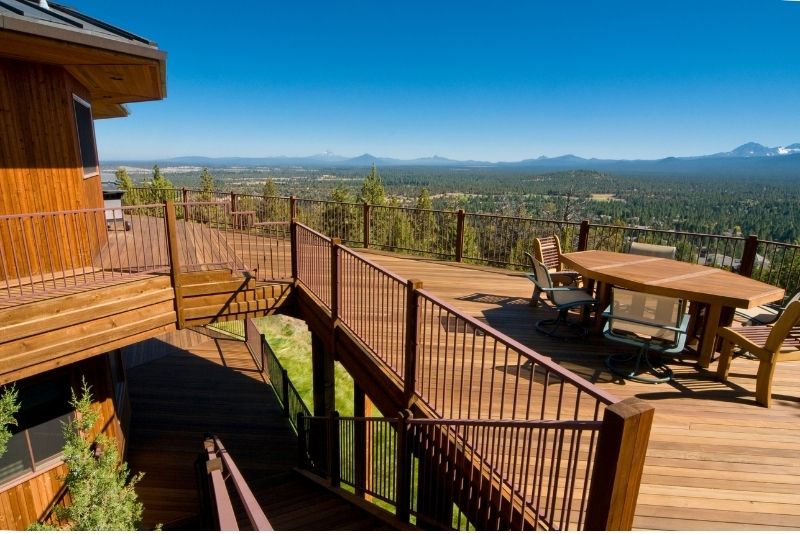
How Central Coast Council's Geotechnical Requirements Work
Central Coast Council's geotechnical requirements (DCP 2022 Chapter 3.7) cover all land in the Central Coast Council area. Terrigal is part of that.
These rules are linked to Development Applications. A DA is the form you lodge when you need Council's OK to build. Does your deck need one? That's a question for Council, based on your project.
If you do need a DA, one big thing Council looks at is your lot's hazard category. Think of it as a rating for how much landslip risk your site has. If your lot is Category 2 or higher, Council will want a geotechnical report with your DA. That report looks at how stable your site is and how the work could affect the lots next door.
A geotechnical engineer writes this report. The DCP has its own description of what a geotechnical engineer is, and it even mentions the Terrigal Formation.
The DCP also has extra rules for Category 3 and above, and for Category 4. The details for those are in the DCP itself.
| Hazard category | What the DCP sets out |
|---|---|
| Category 2 or above | DA to be supported by a geotechnical report covering site stability and impact on adjoining lots |
| Category 3+ and Category 4 | Further requirements set out in DCP 3.7 (check the DCP for details) |
Hazard Category Is Assessed Site by Site
Every block gets its own rating. There's no single rating for all of Terrigal. That means two blocks in the same suburb can be rated differently.
Here's one real example. A ground report for a planned subdivision off Kings Avenue, Terrigal, found Terrigal Formation rock on that site. It was described as interbedded lithic sandstone, which simply means layers of sandstone. The report rated that site Category 2 (medium hazard) as it stood at the time.
Keep in mind, that result is for that one site only. Your block would need its own check.
Beach-Adjacent and Cliff-Top Lots: Coastal Hazard Controls Can Apply Too
Live close to the beach or near a cliff? There may be a bit more to think about.
DCP 3.7 says ground rules about the coast, coastal cliffs and bluffs also need to be looked at where they're relevant. These rules sit in a different chapter, called Chapter 3.2 Coastal Hazard Management.
Anyone who's lived on the Coast for a while knows the shoreline doesn't stay the same. Council's own monitoring recorded a lot of erosion at Terrigal between June 2019 and 2020. Some of the bigger changes in sand levels in that monitoring were at Terrigal.
This only matters for some blocks, not every Terrigal home. If yours is near the beach or a cliff, ask Council if Chapter 3.2 applies to your deck.
What to Check Before You Ask for Deck Quotes on a Sloping Terrigal Block
A bit of homework now can save you headaches later. Before you ask for quotes, run through this list:
- Call Council early. If landslip could be an issue on your block, Central Coast Council suggests you get in touch before you lodge. If you only do one thing on this list, make it this one.
- Ask if your deck needs a DA. Council can tell you for your project.
- Find out your lot's hazard category. Whether you need a geotechnical report depends on it.
- Check the coastal rules. If you're near the beach or a cliff, ask if DCP Chapter 3.2 applies.
- Talk about footings and site access with your builder. On a sloping block, these are worth raising early, not at the last minute.
Our tip: when you ask for quotes, have a few documents ready if you can. A survey of the block, or at least its boundaries and levels, any geotechnical report already done for the property, and any letters or emails from Council about your block. With these in hand, your builder can see the fall of the land and any known site issues sooner, and the quote can reflect your actual site.
What This Can Mean for Footings and Design
The ground and the slope both shape how footings and raised decks are planned. That's why we always say: start with the site, then the design.
On a sloping or elevated site, footings usually take more planning than on flat ground. Post heights, footing depths and bracing all change with the fall of the land. Getting materials and equipment onto a steep or tight block can take extra planning too. That's why we look at the slope and the access on site before we draw up a design.
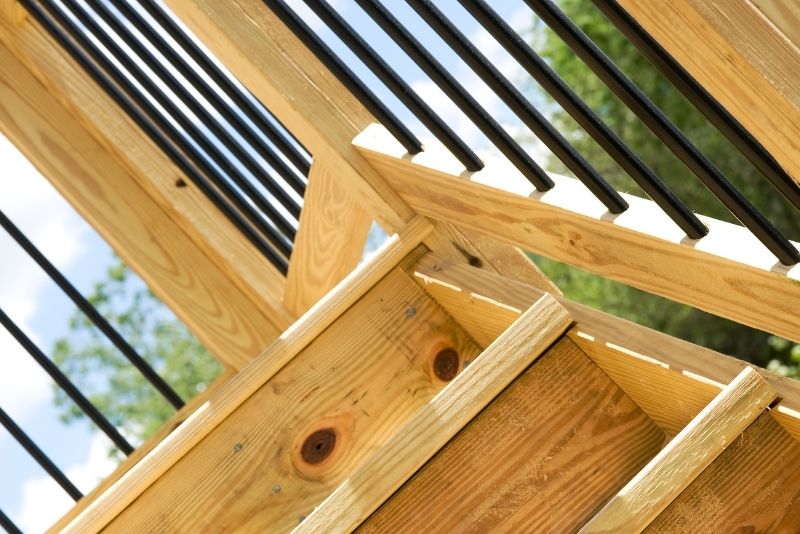
If your slope looks like it could suit more than one level, check out our multi-level deck designs. Want some ideas for the layout? Have a look at our design ideas for decks on sloped yards.
Once you've done your checks and you're keen to chat about your sloping block, take a look at our Terrigal deck building service.
No two sloping blocks in Terrigal are the same, and the ground under yours is worth checking early. Each block gets its own rating, so Council and a qualified geotechnical engineer are the best people to advise on your lot. Think of this guide as a starting point. It's not a replacement for their advice.
A design or price worked out before the site is checked can change once the ground, the slope and any Council requirements are known. Footings, post heights and access can all shift. Getting the site checks done first means the design and quote you get are based on your actual block.
When your site checks are underway and you're ready for the next step, find out more about our decking for Terrigal homes.