

Ask anyone in Copa about their deck, and they’ll tell you about the view. Fair enough. On a clear morning, the ocean is hard to beat.
But the building rules don’t care about the view. They care about one thing: how far your home is from where the waves break.
Copacabana Beach faces east-southeast. Waves here are about 1.5 m on average. Behind the sand, houses climb up the hill and the northern slopes. So if you’re planning a new deck, a bigger deck or a fix-up, there’s a simple question to ask first: how close is your block to the surf?
You’ve probably heard people say “it’s the salt air” when things rust on the Coast. That’s true in a loose way. But there’s also a real rule. It links the fixings that hold your deck to your house to a set distance from the surf.
In our view, this is the question to sort out before anything else. Here’s what we’ll cover:
Copacabana’s Surf Setting and Why Distance Matters for a Deck
Copacabana is part of the Central Coast Council area. The Tasman Sea sits to the south. Cockrone Lagoon and MacMasters Beach are to the southwest. Avoca Beach is just over the hill to the north.
The beach faces east-southeast. The waves are about 1.5 m at the Copa end. They get smaller, about 1 m, as you head toward MacMasters. At the north end is Tudibaring Head, a sandstone headland 110 m high. Homes sit all the way up the slopes behind the beach.
That’s why distance matters here. Some homes are near the sand. Others are up the hill. The building rules use distance from breaking surf to decide what some deck parts must be made of. Let’s look at that rule.
The 200 m Rule: What the Building Code Ties to Breaking Surf
What does the building code say about deck fixings within 200 m of breaking surf?
Many decks are joined to the house with a waling plate. This is a piece of timber or steel fixed to the house wall. The deck’s joists (the long beams under the boards) rest on it. The rules for this are in Part 12.3 of the NCC 2022 Housing Provisions. They say what the fixings holding the waling plate to the wall must be:
- If your home is within 200 m of breaking surf, these fixings must be stainless steel.
- Everywhere else, they can be hot-dipped galvanised, stainless steel or monel metal.
- If the deck is in a severe corrosion environment, its bracing and fixings must meet Tables 6.3.9a, 6.3.9b and 6.3.9c.
This is general information. Always check how it applies to your deck with a certifier or engineer.
You can read the Housing Provisions on attaching decks to external walls on the ABCB website.
| Where the home is | Fixings allowed to hold the waling plate to the wall |
|---|---|
| Within 200 m of breaking surf | Stainless steel |
| All other areas | Hot-dipped galvanised, stainless steel or monel metal |
Keep in mind, this rule is about one spot: where the deck meets the house. This guide sticks to that rule. It doesn’t cover every screw, board fixing or bracket on a deck.
There’s a bracing rule too. It’s for decks more than 1 m off the ground. If your deck is in a severe corrosion environment, the bracing and its fixings must follow the tables above. Your certifier or engineer can tell you if that’s you.
Want to know more about how salt air affects deck fasteners more generally? We’ve written a separate guide on that.
Where Does Your Copacabana Block Sit? Why the Answer Needs Confirming
In Copa, two houses on the same street can sit at quite different spots on the hill. So our advice is simple. Don’t assume. Find out.
Industry groups talk about coastal exposure in bands. The Housing Industry Association (HIA) says “very high” exposure usually runs from 100 m to 200 m inland from breaking surf. That’s HIA’s way of explaining it. It isn’t the building code.
In NSW, Building Commission NSW advice on steel house posts says certifiers must pick a corrosivity category for a site. The choices are low, medium, high or very high. That advice is about the posts under a house, not decks. But it shows this is a call for a certifier to make, not a guess.
We won’t tell you whether your street or block is within 200 m of breaking surf. Every property is different, and it needs to be checked for your site.
Don’t guess your category — confirm it.
Bring up your location with your certifier, engineer or builder before any plans are drawn.
Not sure where your block sits? You can talk through your block’s position with a Copacabana deck builder before you plan your project.
Elevated Decks on Sloping Blocks: Steel Posts and Subframes
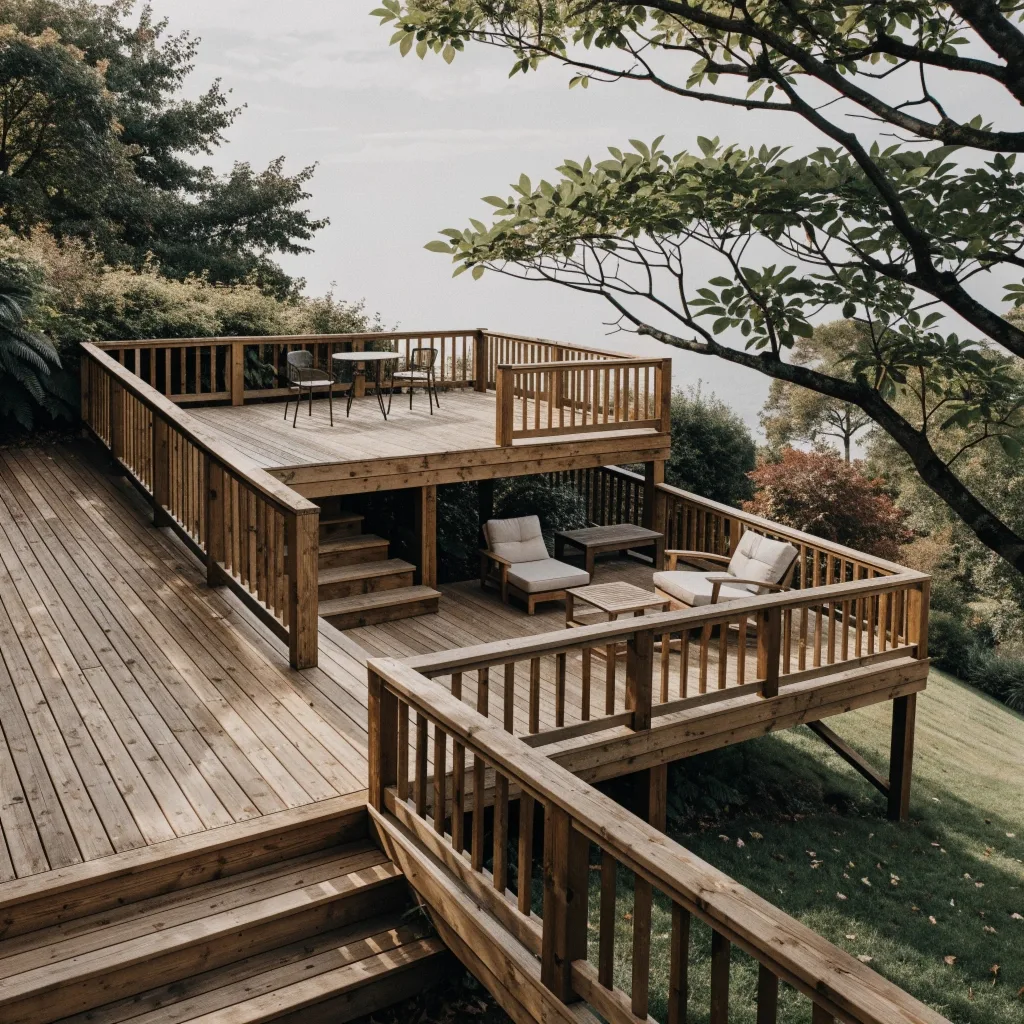
Lots of Copa homes sit on the slopes behind the beach. On a sloping block, the deck often stands up on posts. You might even be thinking about multi-level decks on sloping blocks.
Building Commission NSW has raised a worry about steel posts near the coast. It says a lot of class 1a buildings (houses) in coastal parts of Eastern Australia were built on steel posts without enough thought about corrosion at that spot. That left them without enough protection against rust. This advice is about posts that hold up houses. It isn’t a rule written for deck posts or the frame under a deck.
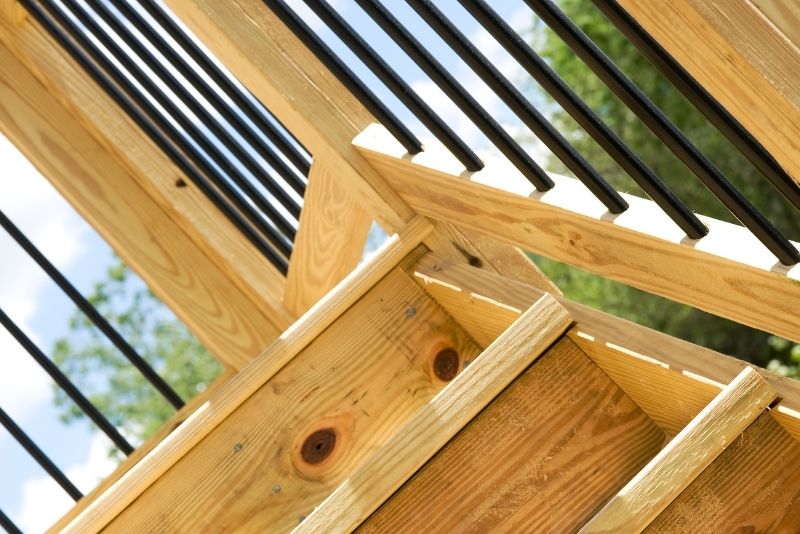
The same advice says certifiers decide the corrosivity category, from low to very high. Does that apply to your deck posts? That’s a good question for your certifier.
Then there’s the deck rule from earlier. If a deck is in a severe corrosion environment, its bracing and fixings must meet Tables 6.3.9a, 6.3.9b and 6.3.9c. If your deck stands up high near the surf, ask your certifier or engineer if your site counts.
Building New, Extending or Repairing: What to Raise Before Work Starts
New deck, bigger deck or fixing an old one, the same questions come up near the beach. Our advice: take this list along when you talk to your builder, certifier or engineer.
- Is my home within 200 m of breaking surf, and who checks that? Ask your certifier or engineer to confirm it.
- What fixings will hold the deck’s waling plate to the house? Ask if they suit your spot under the Housing Provisions.
- Is my site a severe corrosion environment? If yes, ask if the bracing and fixings follow Tables 6.3.9a, 6.3.9b and 6.3.9c.
- If my deck is on steel posts, what corrosivity category was used? Ask who decided it.
- Do today’s rules apply to my repair or extension? Ask your certifier how the rules work for an existing deck.
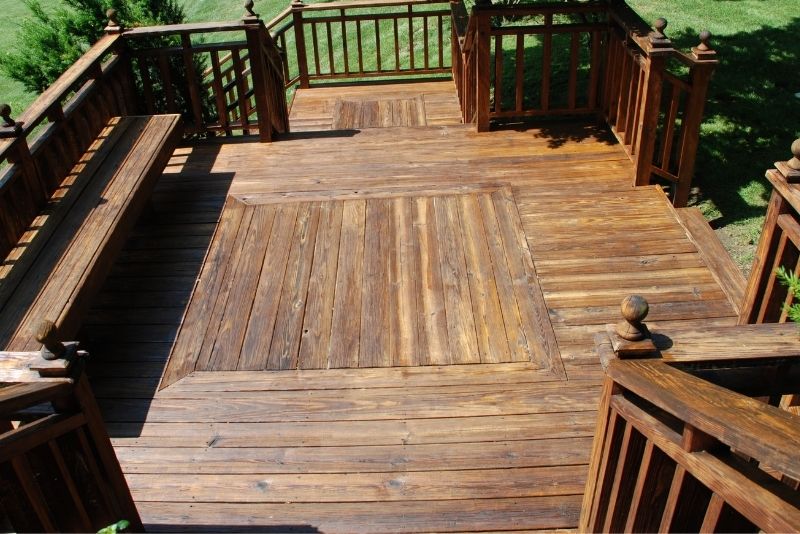
Fixing up an older deck? Our deck repair and restoration page explains what we do. Planning something new? Read more about deck building in Copacabana.
Beachfront or Tudibaring Headland Block? One More Thing to Check
If you’re right near the beach or close to Tudibaring Head, there’s one more check. Central Coast Council has a MacMasters Copacabana Beach Coastal Hazard Map.
Chapter 3.2 (Coastal Hazard Management) of the Central Coast DCP 2022 applies if your site is in the Coastal Vulnerability Area. Whether your block is affected has to be checked for your property.
The Short Version: What to Confirm for Your Copacabana Deck
- Distance to breaking surf is what counts. Within 200 m, the fixings that hold your deck’s waling plate to the house must be stainless steel.
- Check where you sit. Ask a certifier or engineer instead of guessing.
- Ask about fixings, bracing and posts. Do it before you design, extend or repair.
Living near the surf in Copa is a great thing. Getting this one question answered early just makes the rest of the job easier. When you’re ready, speak with our team about deck building in Copacabana.