

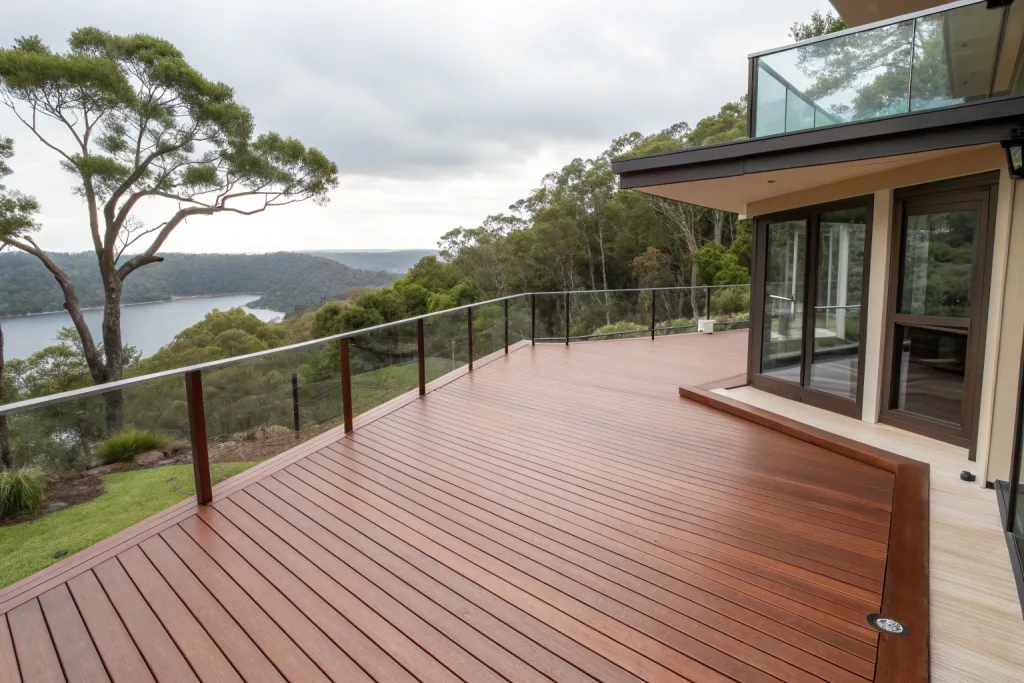
If you're weighing up Ekodeck composite decking for a north-facing entertaining area or a pool surround, heat underfoot is a fair question to ask before you commit. Composite boards blend recycled material with polymer, and that mix can run warmer in full sun than raw timber — but colour choice makes a far bigger difference than the material itself. Here's what the actual heat testing shows, and how to pick the coolest Ekodeck colours for a Central Coast summer.
How Hot Does Ekodeck Really Get?
Ekodeck has published its own comparative testing, using an infrared thermometer to record surface temperatures hourly across a clear, sunny day with an ambient temperature of 29°C. Across that test, Ekodeck composite boards ran 4–7°C hotter than equivalent timber decking tones measured under the same conditions.
The lightest board in Ekodeck's own range recorded the lowest surface temperature; the darkest recorded the highest. In every test, colour — not the composite material itself — was the biggest driver of surface heat. On a Central Coast summer day, ambient temperatures regularly sit at or above the 29°C used in that test, and full, unshaded sun will push surface temperatures higher again. That's normal for any dense outdoor decking material, timber included — it's just more noticeable on a still, cloudless afternoon. (See Ekodeck's own heat test results for the full methodology.)
Ekodeck Color Temperature Comparison
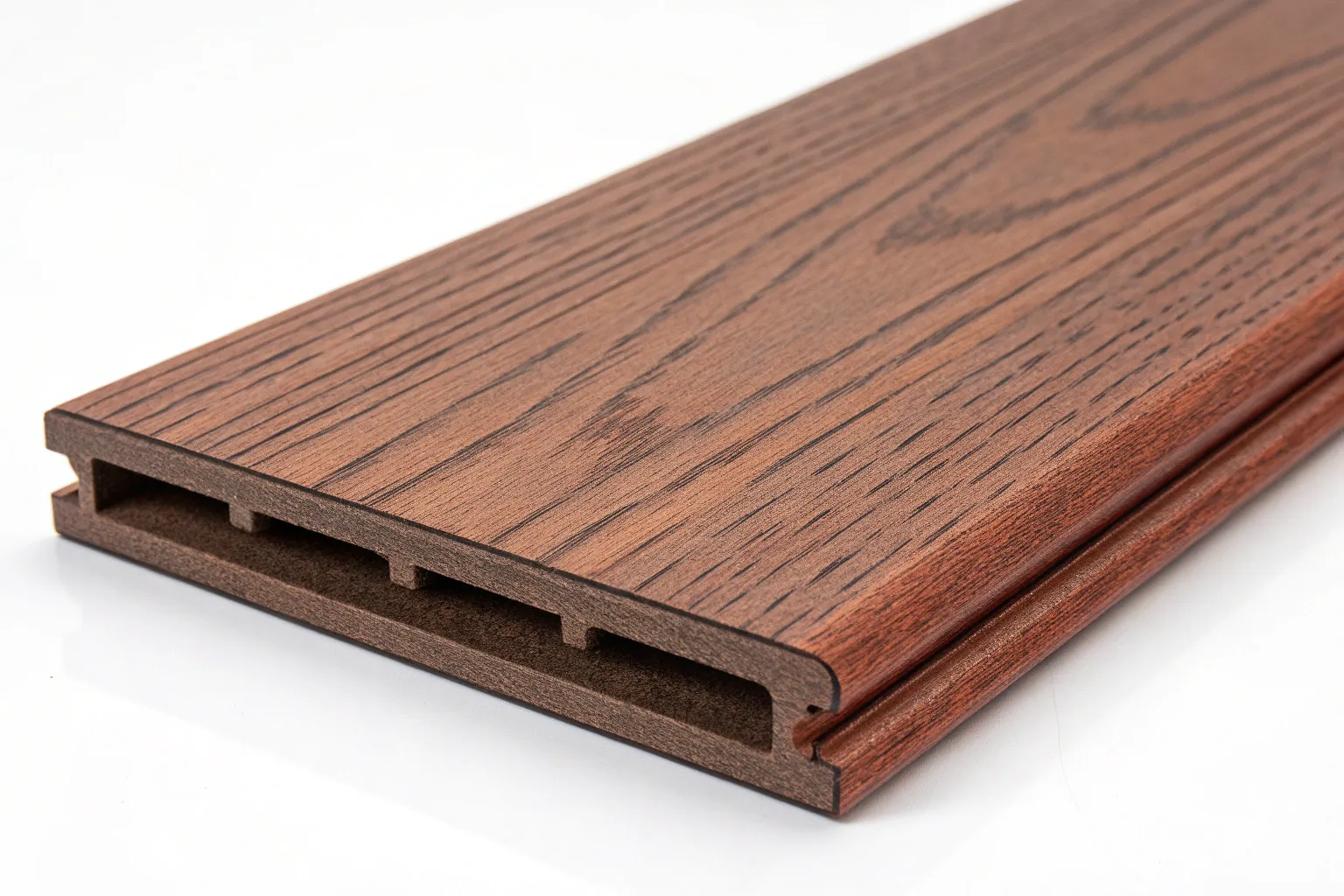
The Ekodeck range we install runs from light, reflective tones to deep, dark shades — and that spread is exactly what determines how hot a board gets underfoot. Lighter colours reflect more solar radiation; darker colours absorb and hold more of it.
- Silver Gum — contemporary grey, the most reflective and coolest colour in the range.
- Teak — warm golden-brown, stays noticeably cooler underfoot alongside Silver Gum.
- Jarrah — rich reddish-brown, sits in the middle for heat retention.
- Walnut — deep chocolate-brown, absorbs more heat in full sun.
- Charcoal — sophisticated grey-black, the darkest and warmest option in the range.
These are relative rankings based on how light and dark pigments behave in direct sun, not a lab reading for each individual colour — actual surface temperature on the day will still depend on ambient temperature, shade, airflow and orientation. But the pattern holds consistently enough to plan around: if heat underfoot is a priority, lean toward Silver Gum or Teak over Charcoal or Walnut.
Ekodeck Plus vs Standard Heat Performance
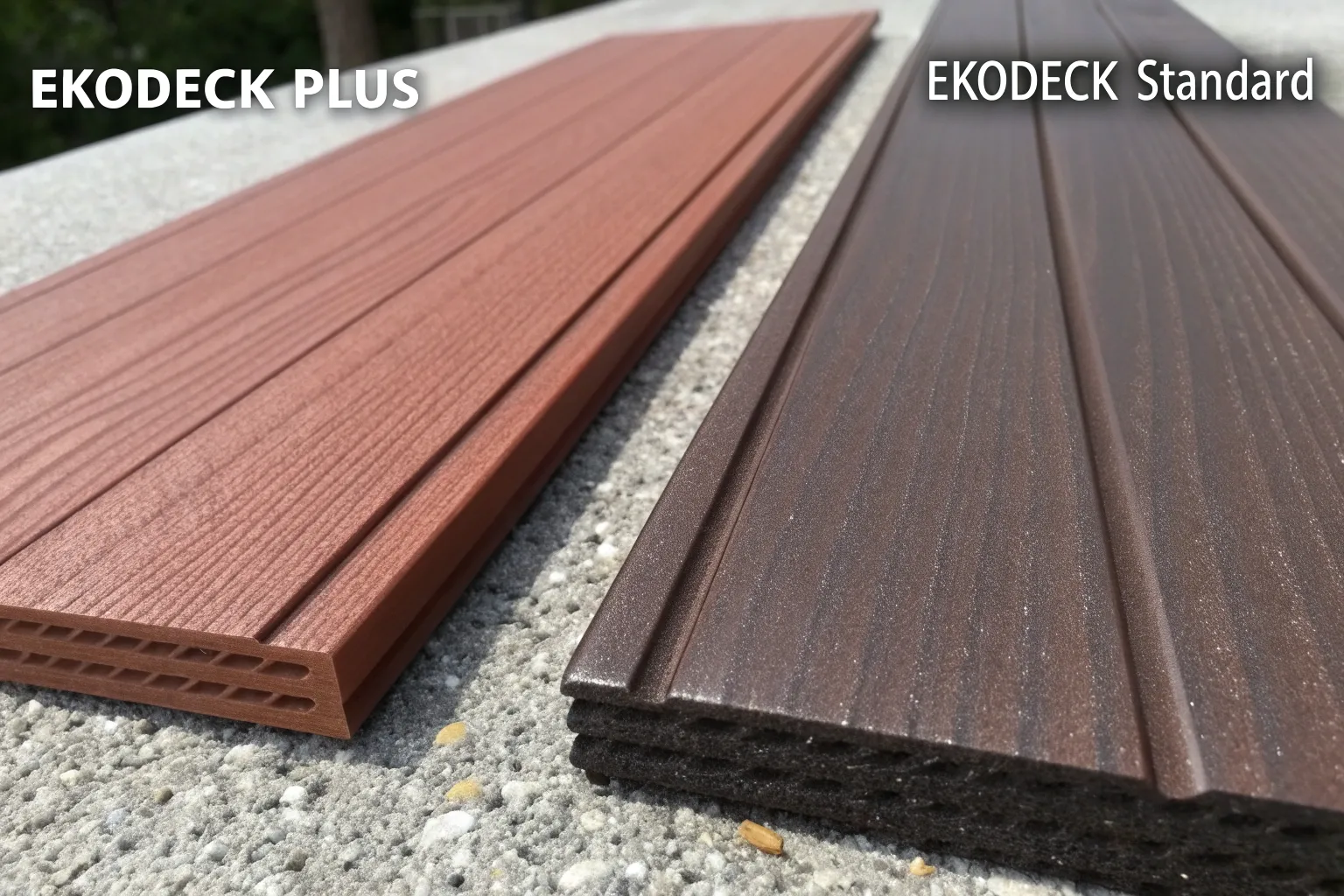
It's worth being clear on what our Ekodeck Plus vs Standard comparison actually covers. Ekodeck Plus adds a capped, protective outer layer engineered for better scratch, stain and fade resistance over the life of the board — it isn't a heat-specific coating, and there's no published data showing Plus runs cooler than Standard in the same colour.
In practical terms: colour is still the dominant factor for surface heat in both ranges. Where Ekodeck Plus earns its price premium is in keeping a dark colour looking newer for longer — useful if you want the look of Charcoal or Walnut and are prepared to manage the heat trade-off with shade or timing, rather than switching to a lighter board.
Cooling Solutions for Hot Composite Decks
If your deck faces north or west — the hardest sun aspects in the southern hemisphere — a few practical changes make more difference than switching materials entirely:
- Add overhead shade. A shade sail, pergola or alfresco roof over the hottest section of deck cuts direct solar gain more than any board colour can.
- Plant for afternoon shade. Trees positioned on the western side soften the harshest late-day sun without blocking winter light.
- Hose it down before barefoot use. A quick rinse drops surface temperature fast on a hot afternoon, especially around pools.
- Use outdoor rugs or runners across high-traffic, full-sun sections where bare feet cross most often.
- Time your use. Morning and evening sun load is a fraction of the midday peak.
- Check subframe ventilation. Decking installed with proper airflow underneath sheds heat faster once the sun moves off it.
Best Ekodeck Colors for Full Sun Areas
For decks and pool surrounds that sit in unbroken sun most of the day, Silver Gum and Teak are the most comfortable choices in the range — they run cooler underfoot and suit barefoot traffic around a pool. Jarrah is a reasonable middle ground if you want more warmth in the tone without going as dark as Walnut or Charcoal.
Save Walnut and Charcoal for covered alfresco areas, shaded courtyards, or decks that get most of their use in the evening — spaces where the deeper colour reads beautifully without the barefoot-comfort trade-off of full midday sun.
The single biggest lever for a cooler Ekodeck deck is colour, followed by shade and orientation. If you're weighing up colours for a full-sun spot on the Central Coast, come and see samples in real daylight before you decide — browse our composite decking range or call us today.