

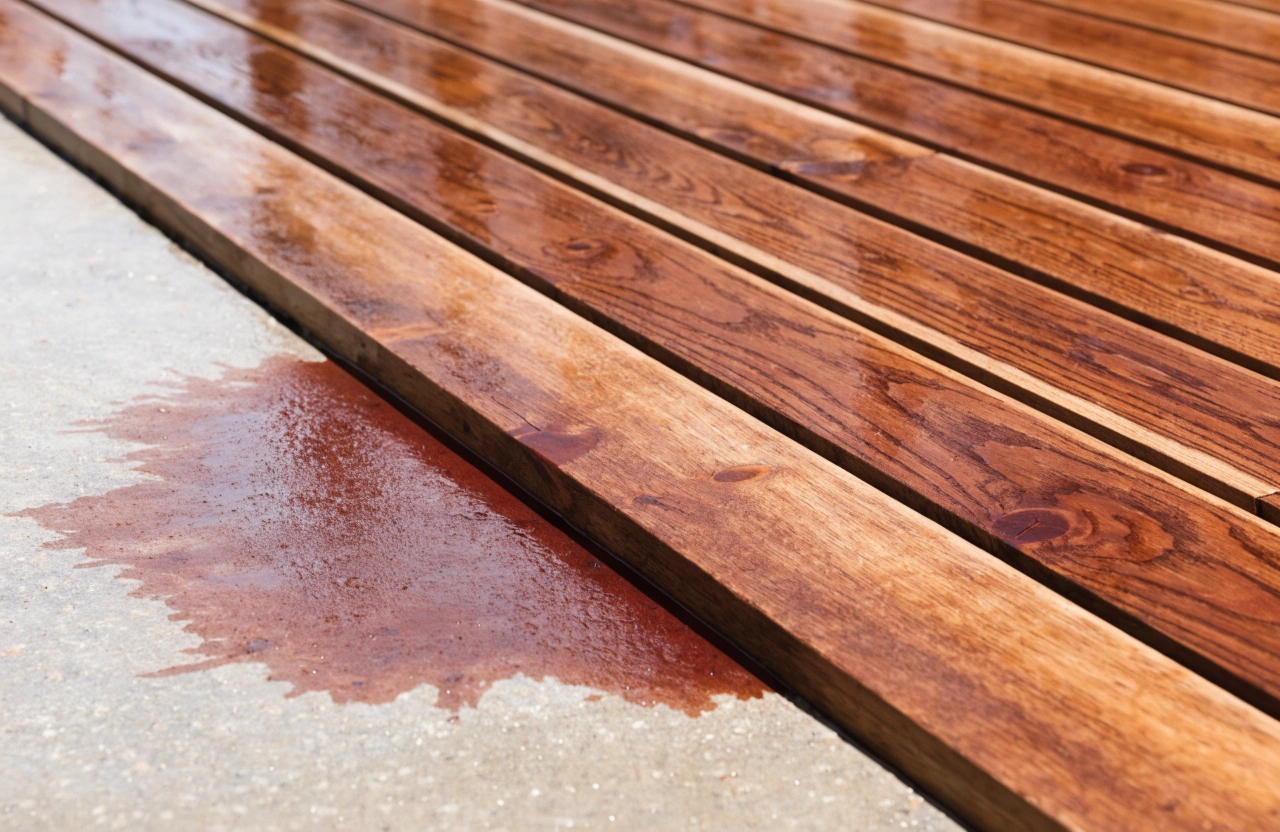
It's one of the most common calls we get a week or two after finishing a new Merbau deck: reddish-brown streaks running off the boards onto pavers, pool coping, or the concrete path below, and an understandably worried homeowner wondering if something's gone wrong. It hasn't — this is tannin bleed, a completely normal part of how hardwood decking settles in. Here's exactly what's happening, how long it lasts, and how to stop it marking anything it shouldn't.
What Causes Tannin Bleed in Merbau Timber
Tannins are natural compounds found in Merbau and most other hardwood species, concentrated in the timber's cells. When a new board gets wet — from rain, sprinklers, or even morning dew — water dissolves some of those surface tannins and carries them out as it runs off, showing up as a reddish-brown stain wherever it lands. It's the same chemistry that makes a strong pot of tea go dark; the timber is simply releasing what's naturally in it. It's not a sign of a poor-quality board, and it happens with virtually every fresh hardwood deck, not just ours.
How Long the Staining Phase Lasts
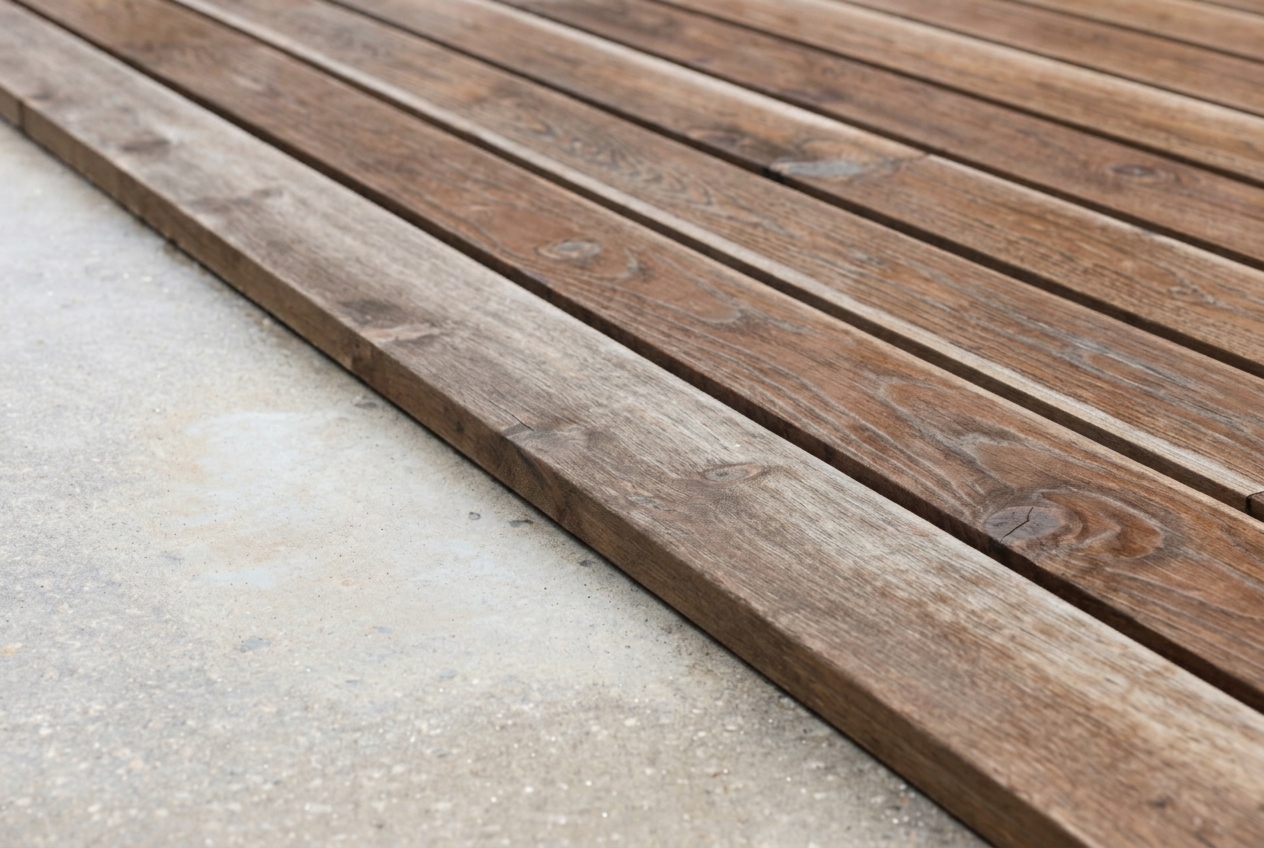
Tannin bleed is heaviest in the first few weeks after installation, while the boards are freshest and haven't yet had a chance to weather. Most decks see the runoff taper off noticeably within one to three months, and it's usually all but gone within six to twelve months as the surface layer of the timber weathers and the readily available tannins wash out. Oiling the deck early speeds this up by sealing the surface and reducing how much tannin-laden water can leach out with each rain event.
Protecting Pavers, Pool Surrounds and Concrete Underneath
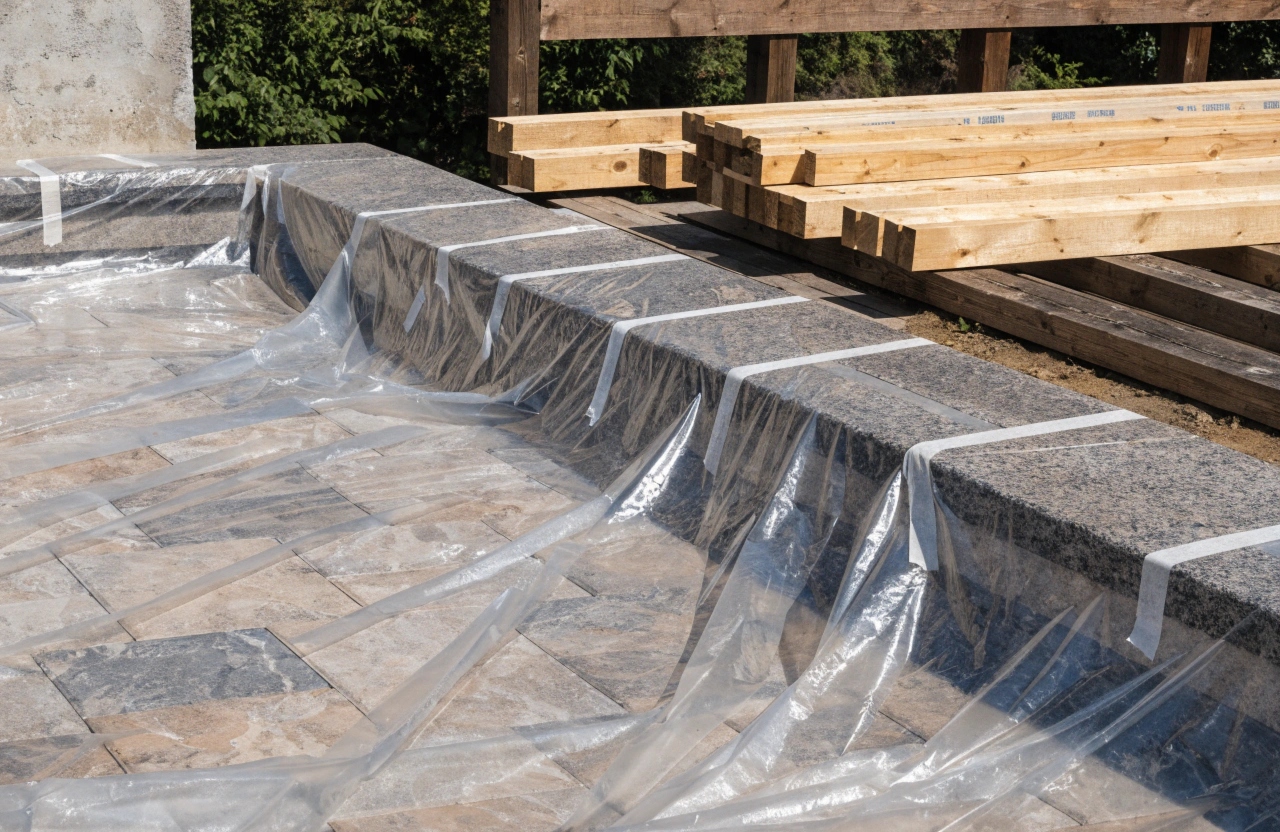
The timber itself isn't at risk, but light-coloured surfaces underneath or beside a new deck are where tannin staining becomes a visible headache — particularly pavers, pool coping, and pale concrete. Porous, unsealed pavers absorb the runoff and hold the stain more stubbornly than sealed ones, so it's worth sealing paving before the deck goes in wherever that's practical. During the first few weeks, covering exposed pavers or coping with plastic sheeting on rainy days, and hosing down any runoff promptly rather than letting it dry in place, prevents most staining before it sets.
The same care applies around patios and any outdoor entertaining area bordering the new decking — anywhere light-coloured hard surfaces sit downhill or downwind of fresh Merbau boards is worth a quick check after the first few rain events.
How to Clean Up Tannin Stains
If staining does mark a paver or concrete surface, it's still just a surface stain and can usually be lifted:
- Fresh stains often lift with warm water, a stiff outdoor brush, and a mild household detergent.
- Set-in stains respond better to an oxalic-acid-based deck and paving cleaner, which is specifically formulated to break down tannin discolouration.
- Avoid straight bleach on natural stone or some paver finishes, as it can react with minerals in the material and cause a different kind of discolouration.
- Always test any cleaner on a small, inconspicuous area first, particularly on natural stone or coloured concrete.
Signs It's Tannin vs an Actual Problem
Tannin staining is cosmetic and temporary — the board underneath is sound, and the colour lightens over time as the timber weathers. It's worth knowing the difference between that and a genuine issue. A board that feels soft or spongy underfoot, a dark, damp patch that isn't fading after several months, or a musty smell coming from the deck are not tannin-related and point to moisture getting trapped somewhere it shouldn't be. If you notice any of those, it's worth having it looked at rather than assuming it will weather away — our deck repair and restoration team can assess whether it's tannin, a maintenance issue, or something more serious.
Steps We Take to Minimise Staining During Installation
We build tannin management into every Merbau deck construction job rather than leaving it as something you deal with afterward. That includes protecting adjacent pavers, pool coping and concrete with sheeting during the build and the weeks immediately after, recommending an early first oil coat to seal the surface sooner, and talking through what to expect in the first rain events so it's never a surprise. Choosing a well-dried, select-grade board also reduces the volume of tannin available to leach out compared with a lower-grade board straight off the stack — one more reason board grade matters beyond just appearance, alongside the general timber characteristics covered on our hardwood decking page.
Tannin staining is one of the most misunderstood parts of owning a new hardwood deck — normal, temporary, and nothing to worry about with the right precautions in place. If you'd like to talk through what to expect for your specific site, get in touch for a free on-site quote.