

A cupped board or a hairline split along the grain is one of the more unsettling things to spot on a deck you just had built — it's easy to jump straight to "did they use bad timber" or "is this going to fail." Most of the time it's neither. It's normal timber behaviour that catches people off guard because nobody explained it up front. Here's what's actually going on, what's a genuine installation problem versus expected movement, and what to do about either.
Why Fresh Treated Pine Moves So Much
Treated pine is almost always supplied and installed while it's still holding a lot of moisture — both from the timber itself and from the treatment process that pushes preservative deep into the board. As it dries out and equilibrates to the air around it over the following months, the timber shrinks, and it doesn't shrink evenly. The top face is exposed to sun and air and dries fastest; the underside, sitting closer to the subframe and shaded from direct sun, dries more slowly. That difference in drying speed between the two faces is what pulls a flat board into a gentle cup or bow. Some movement in the first year is expected, not a sign the deck was built wrong.
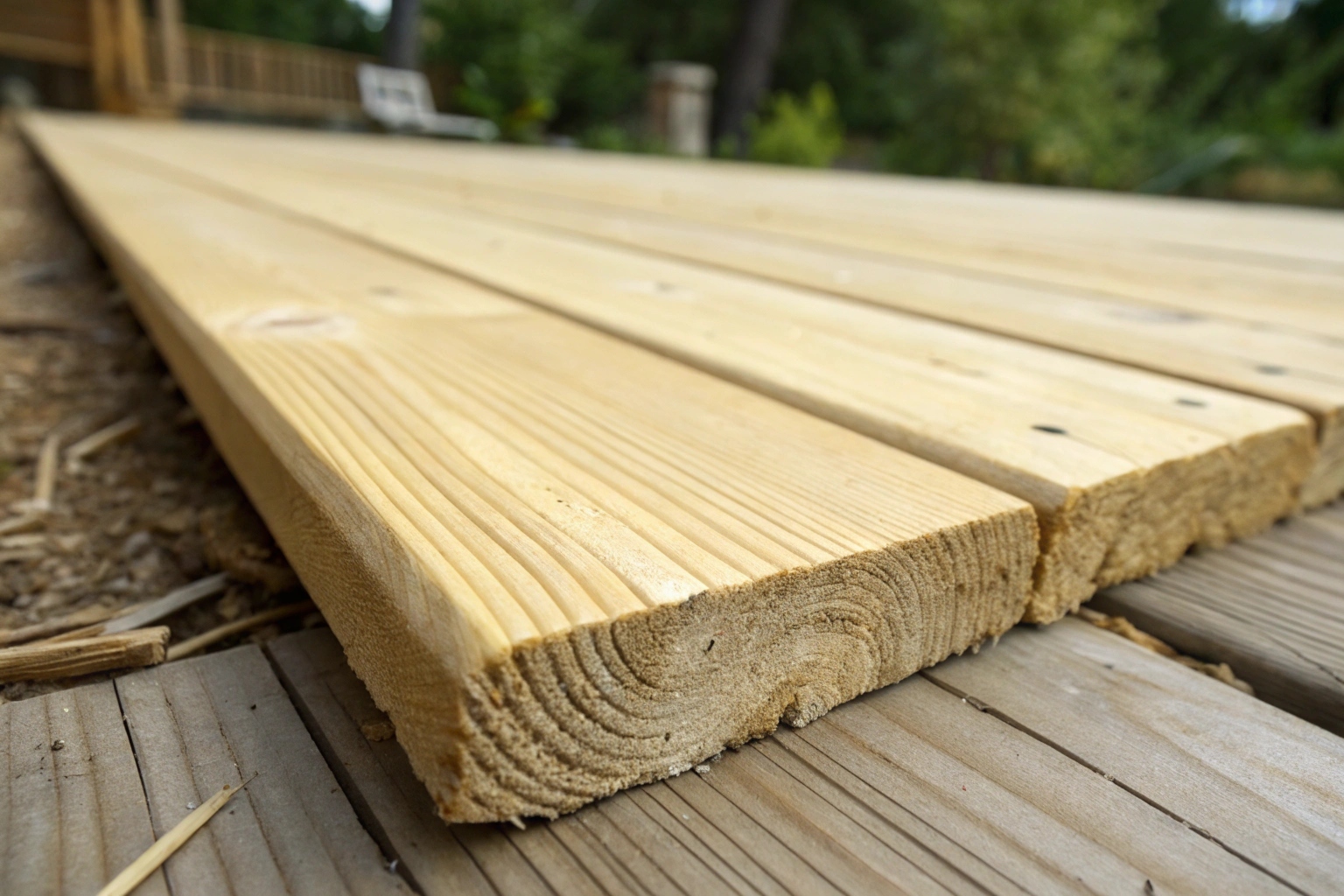
The Role of Drying and Board Spacing
Board spacing has to account for the fact that a freshly installed board is close to its widest point and will get narrower as it dries. If boards are laid tight, or with too small a gap, the deck can end up with uneven, ugly gaps opening up over the following months as each board shrinks by a slightly different amount. We space treated pine at a minimum of 5-6mm, and closer to 8-10mm for wetter or greener stock, specifically to give the timber somewhere to go as it dries rather than fighting against its neighbours. This ties into the same drying-related considerations covered in our piece on H3 vs H4 treated pine — treatment grade affects how much moisture the timber is holding and how exposed it is to ongoing dampness, both of which influence how much it moves.
Installation Mistakes That Cause Warping
Some warping is unavoidable drying behaviour, but a fair amount of what we get called out to look at is made worse — or caused outright — by how the deck was put together. The common culprits: a single fixing point per joist instead of two, which leaves a board free to twist as it dries; screwing close to the end of a board without pre-drilling a pilot hole, which splits the end grain; joist spacing set too wide for the board thickness, which lets boards sag and bow between supports; and a subframe with no ventilation or drainage underneath, which traps moisture unevenly and makes the top-versus-bottom drying gap worse rather than better. None of these show up on day one — they show up three, six, twelve months later, which is exactly why it's worth asking how a builder handles fixing pattern and subframe ventilation before the deck goes down, not after.
Can a Warped Board Be Fixed, or Does It Need Replacing?
It depends on how far along the drying process the board is and how severe the movement is. A board with mild cupping or a slight bow, caught within its first year, can often be pulled back into line and re-fixed with an extra screw — the timber is still moving toward its final, stable shape, so there's something to work with. Once a board has fully dried and set into a warped shape, or has split through a meaningful portion of its thickness or length, forcing it flat usually just cracks it further or pops the fixings loose again down the track. At that point replacing the board is the more reliable fix, and it's a straightforward job as part of a deck repair rather than something that should mean redoing the whole deck.
How We Prevent This on Our Builds
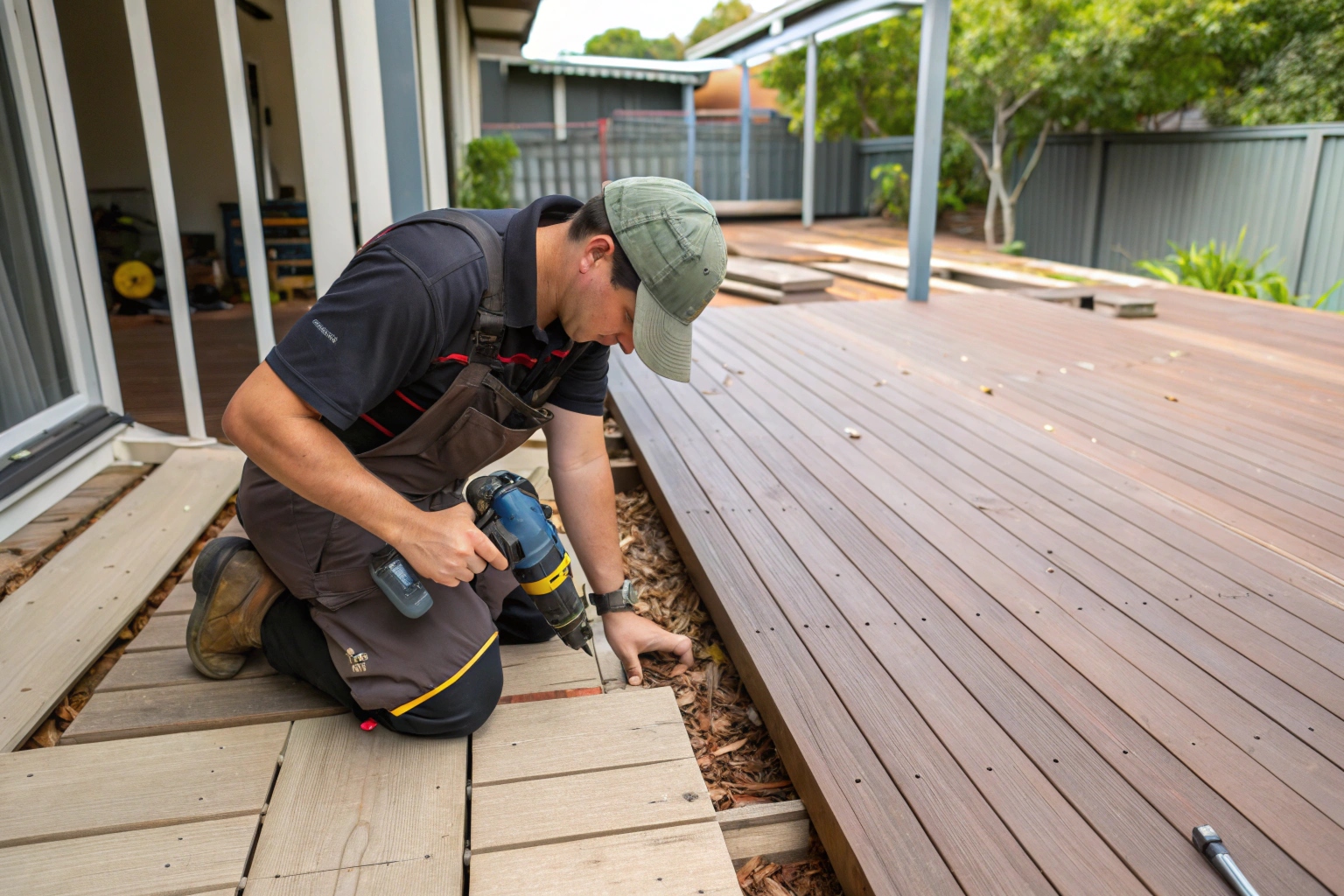
We can't stop treated pine from drying out — that's just what the timber does — but we can control how much of that movement turns into a visible problem. That means sourcing decent, consistent stock rather than the wettest batch available, fixing every board with two coated or stainless screws per joist so it can't twist freely, pre-drilling near board ends, framing to the correct joist spacing for the board thickness we're using, and making sure there's proper airflow and drainage under the deck so the top and bottom of each board dry at closer to the same rate. We also talk owners through what to expect in that first year, so a bit of settling doesn't come as a surprise. If you're planning a new deck build and want it done in a way that keeps this kind of movement to a minimum, that's exactly the sort of detail worth asking us about upfront.
Noticed warping or splitting on an existing deck and not sure if it's normal settling or something that needs attention? Get in touch for a free on-site assessment.