

Central Coast decks deal with a specific combination most inland properties don't: salt-laden air, high humidity, strong year-round UV, and the odd east coast low that brings driving wind and rain. Timber decking shows every one of those conditions on its surface over time. Ekodeck composite decking, by design, doesn't respond to weather the same way timber does — here's exactly why, condition by condition.
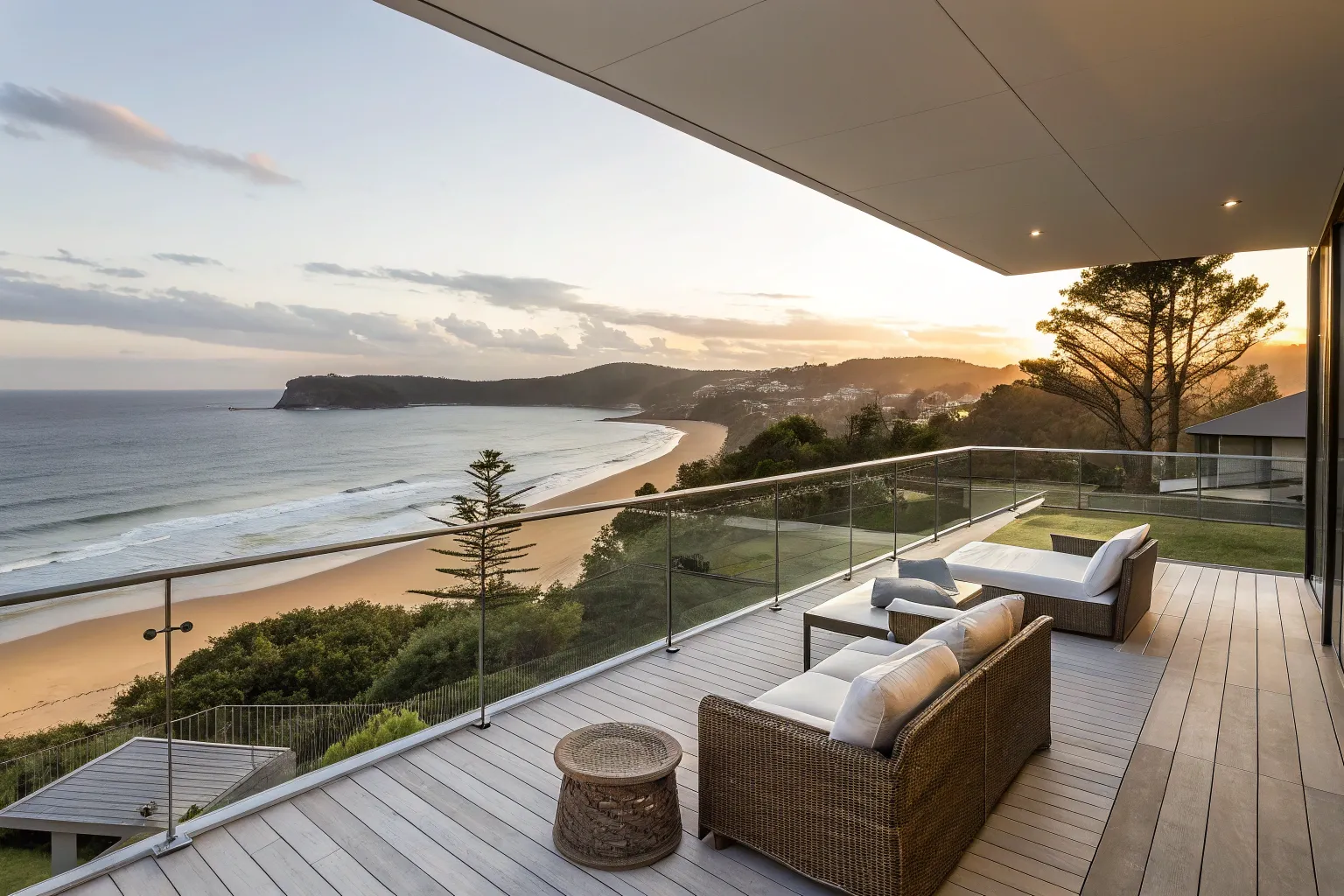
Salt Air Resistance Testing Results
Salt-laden coastal air is one of the harshest things a deck faces on the Central Coast, and it's a standard stress factor composite decking manufacturers account for. On timber decking, salt accelerates the breakdown of exposed wood fibre, raises the grain, and corrodes any metal fixings it comes into contact with — screws, brackets, and joist hangers all suffer for it over the years. Ekodeck's composite core doesn't have exposed organic wood fibre for salt to attack, and its hidden fastening system keeps the metal components largely out of direct salt exposure. The outcome matches what Ekodeck's own coastal-living guidance describes: no corrosion to manage and no salt-driven decay to plan around — ask us for the manufacturer's specific coastal durability documentation if you'd like to see it in detail.
Ekodeck Performance in Humidity
Humidity is a slower, quieter problem for timber than a storm, but it's arguably more damaging over a decade. Timber absorbs moisture from humid air, swells, and then contracts again as conditions dry out — repeated enough times, that cycle causes cupping, splitting, and eventually rot, especially in shaded or poorly ventilated spots. Ekodeck's composite material doesn't absorb moisture into its structure the same way, so it doesn't swell, cup, or rot as humidity rises and falls through a Central Coast summer. That's also why it needs no seasonal prep — no drying-out period before oiling, no closing it off during wet stretches.
UV Exposure and Fade Resistance
Australian UV levels are tough on any exterior material, and colour fade is usually the first visible sign of sun damage on a deck. Ekodeck is engineered for UV stability, with minimal colour change after an initial settling period — and because the colour runs through the material rather than sitting on the surface as a coating, it doesn't peel or wear through to reveal a different colour underneath the way a stained timber surface eventually does. If UV exposure and colour retention are a priority for a full-sun deck, Ekodeck Plus's protective capping extends that fade resistance further over time.
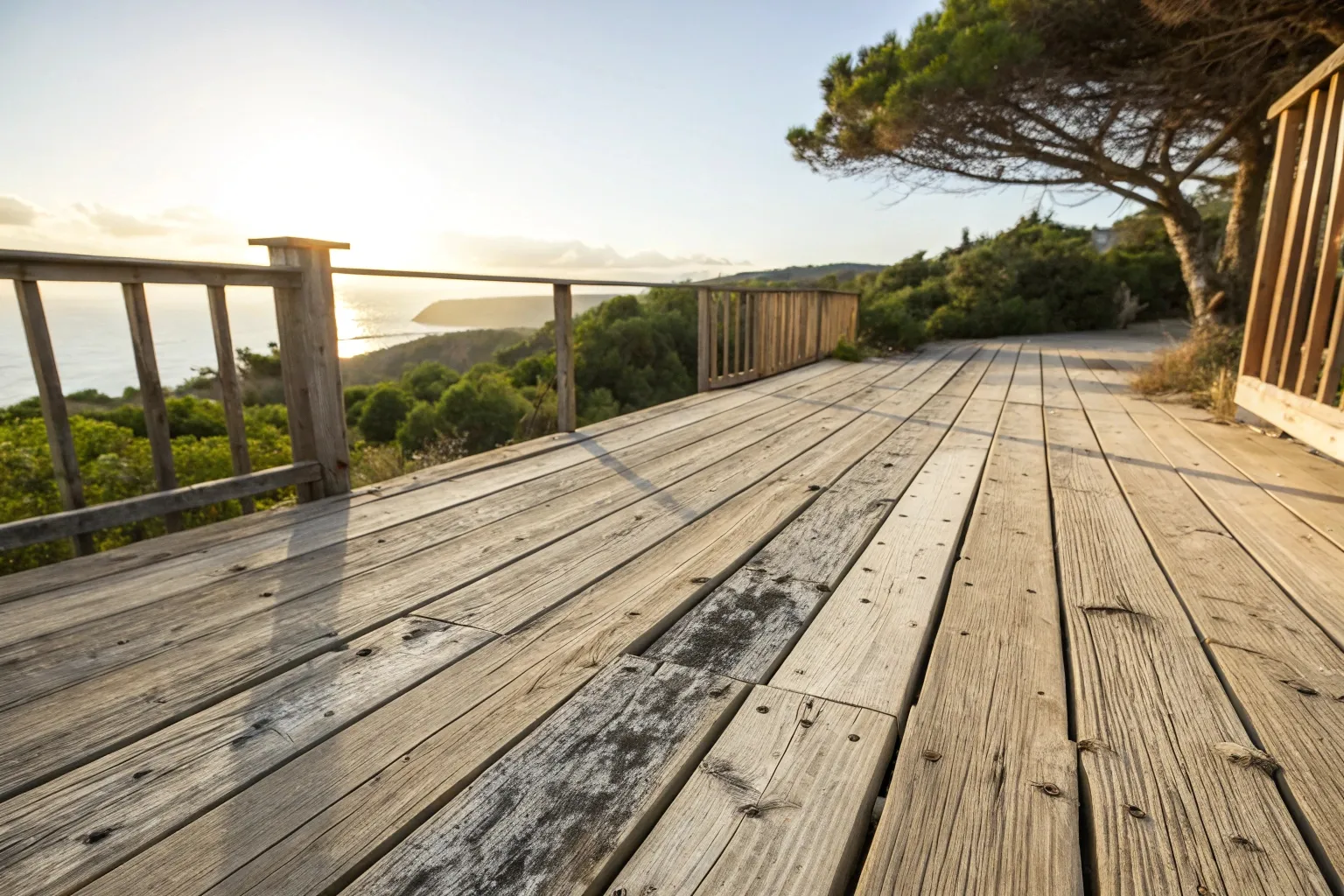
Storm and Wind Damage Resistance
An east coast low doesn't just bring wind — it brings driving, sideways rain that saturates anything porous. Timber that's already cupped or split from humidity cycles is more vulnerable to further movement after a big storm, and wind-driven rain finds its way into any gaps or checking in the board surface. Ekodeck's non-absorbent composite doesn't take on water the same way, so a storm doesn't leave it swollen or warped afterward.
What actually determines how well any deck rides out severe weather is the substructure underneath it — correct joist spacing, secure fastening, and proper ground clearance for drainage and airflow. Getting that right matters just as much as the decking material itself; see our guide on Ekodeck installation requirements for what a compliant subframe involves.
Moisture and Mould Prevention
It's worth separating two different issues that both get lumped under "mould." Structural moisture damage — the kind that lets mould take hold inside timber — isn't something Ekodeck is prone to, since the boards don't swell, cup, or hold water the way timber does. Surface algae or grime, on the other hand, can build up on any outdoor decking material, composite included, if it sits uncleaned for long enough in a damp, shaded spot. The fix for that is simple and occasional: a wash with mild detergent and a soft-bristle brush once or twice a year, typically before the summer entertaining season, keeps the surface both clean and slip-safe.
If you're dealing with an existing timber deck that's already showing rot, cupping, or mould from years of coastal exposure, our deck repair and restoration team can assess whether it's a repair job or a case for switching to a material built for these conditions from the start.
Central Coast weather is exactly the environment Ekodeck composite decking was designed to handle without the seasonal upkeep timber demands. Browse the full Ekodeck composite decking range or call us today to talk through what suits your site.