

Living near the water is exactly why people want a deck — and exactly why they worry about building one. Salt air, storms, and relentless UV all sound like they'd make short work of a softwood like pine. The reality is more specific than "will it survive," and it comes down to a handful of details that matter more here than they do fifteen minutes inland.
What Central Coast Timber Is Really Up Against
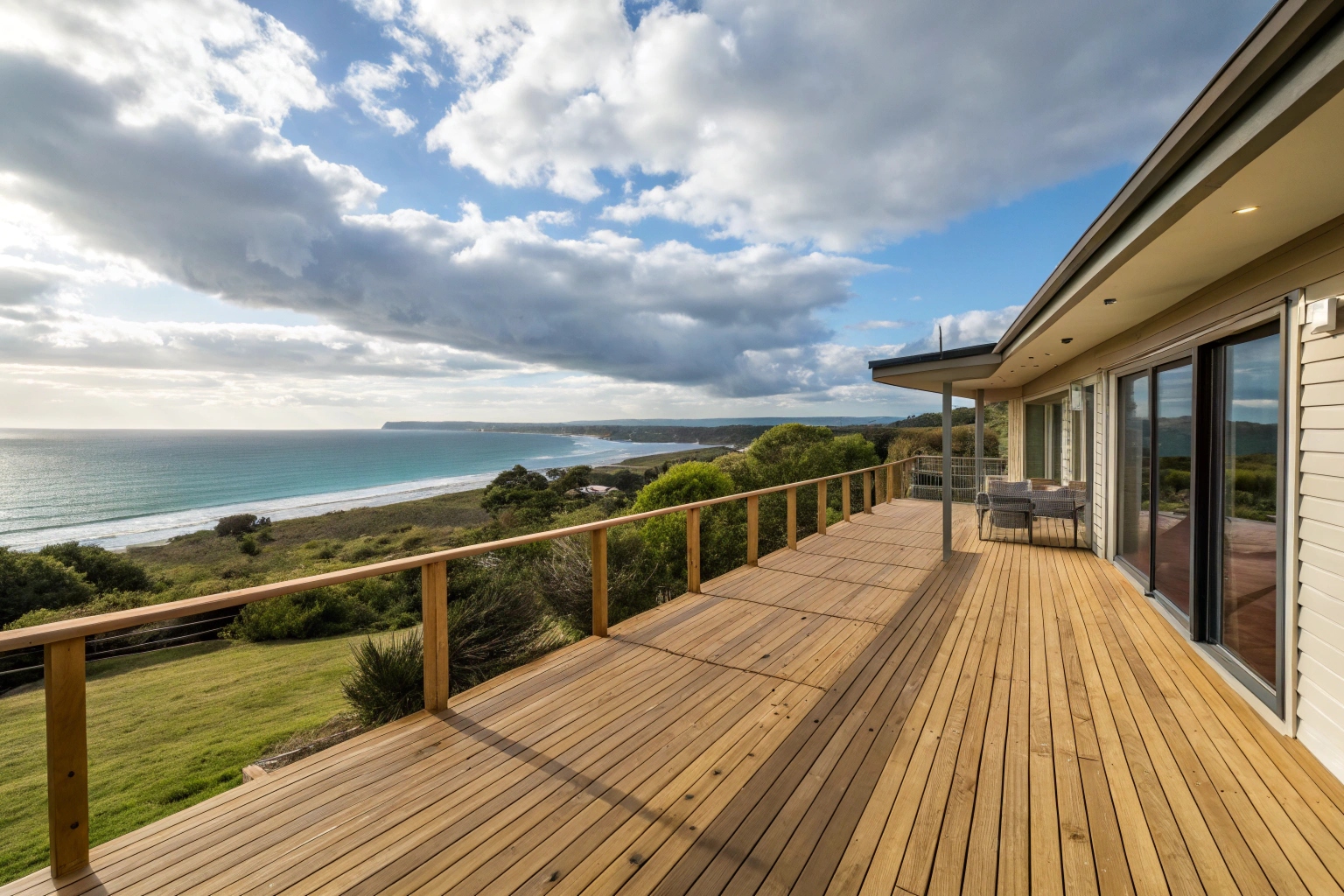
A deck in Terrigal or Copacabana deals with a combination inland suburbs simply don't: salt-laden air rolling in off the water, humidity that sits high through summer and swings hard against drier winter stretches, strong year-round UV, and the odd east coast low bringing sustained wind-driven rain. None of these alone is unusual for Australian timber — it's the combination, and how often it repeats, that makes coastal exposure a genuinely different case to plan for than a deck fifteen kilometres inland.
Salt Air and Corrosion — Why Fasteners Matter as Much as Timber
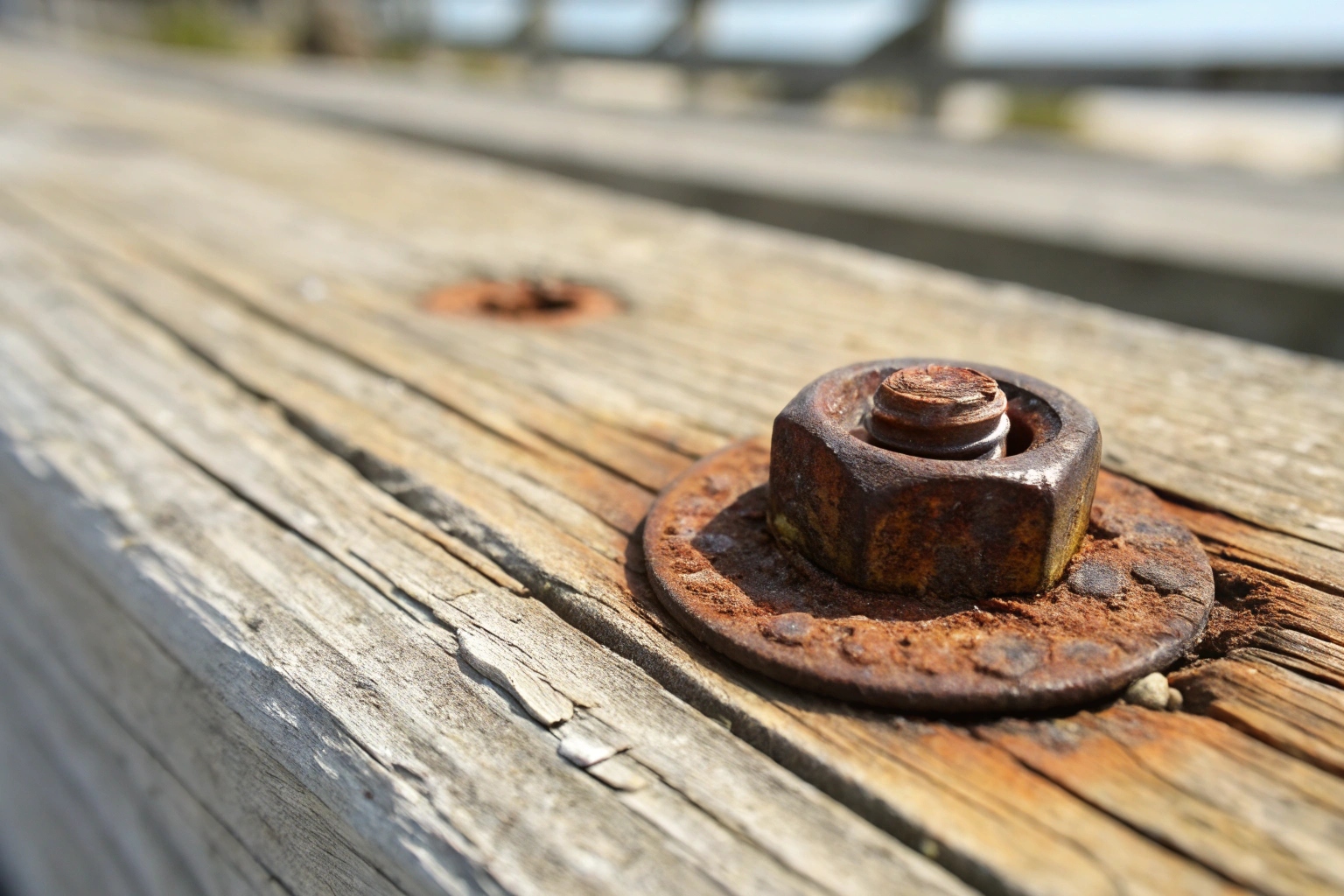
Salt in the air accelerates corrosion on anything metal, and a deck's fasteners take the brunt of it. Standard zinc-plated screws that would last for years inland can start rusting within a season or two right on the coast — and once a fastener corrodes, it loses holding strength, streaks rust down the timber around it, and eventually needs replacing before the board itself does. This is also where mixing metals causes trouble: dissimilar metals in contact near salt air can set up galvanic corrosion that eats through the weaker one faster than either would corrode on its own. Marine-grade stainless or a quality coated screw rated for the distance from the water isn't a nice-to-have this close to the coast — it's usually the actual limiting factor on how long the deck's fixings last, well before the treated pine itself is a concern.
Storms, UV, and Humidity: The Three-Way Attack
These three don't act independently — they compound each other. UV breaks down the surface fibres of exposed timber over time, which is why an unfinished or neglected deck greys and roughens; storms bring wind-driven rain that saturates boards quickly, and the strong sun that typically follows dries them out fast again, which sharpens the same moisture-cycling that drives the cupping and splitting we've covered before. Humidity is the constant in the background — high enough for long enough stretches that Central Coast timber often doesn't get the chance to fully settle at one stable moisture content the way it might in a drier inland climate, which means the movement phase can run longer here than the general "first year" guideline suggests.
How Properly Treated Pine Handles It
Treated pine is built to cope with this — the preservative treatment is specifically what gives a fast-growing softwood the rot and decay resistance it doesn't have naturally, and that protection holds up in humid, salty conditions when the right grade is used in the right place. That's the detail that trips people up: H3 is the standard for above-ground decking boards, but posts and any timber in or near ground contact need H4, because sustained ground moisture is a bigger threat than airborne salt and humidity. Beyond treatment grade, a decent oil or stain finish matters more here too — it's what protects the surface from UV greying and slows how fast the timber takes on and releases moisture, which softens the whole cycle described above. If you'd rather sidestep timber movement altogether, it's also worth reading how composite decking handles the same coastal conditions for comparison.
Signs Your Deck Isn't Coping With the Conditions
Rust streaking radiating out from screw heads is usually the first visible sign, followed by black or green staining in shaded, damp corners that don't get enough airflow or sun to dry out between rain events. Soft or spongy patches are more serious — that's decay getting a foothold, usually where a finish has failed or the subframe isn't draining properly, not a failure of the treatment itself. Persistent cupping or movement well past the first year, and timber that's gone silvery-grey where the finish has worn off, both point to a deck that's overdue for attention. Any of these are worth a proper inspection and repair rather than waiting to see if they get worse on their own.
Not sure how your deck is holding up against the salt air and storms? Get in touch for a free on-site assessment and an honest read on what, if anything, needs attention.